There's a specific kind of tired that has nothing to do with sleep. It's the feeling of opening a dating app for the fourth time today, scrolling past the same six faces, and closing it again without messaging anyone — not because no one is interesting, but because you already know how this goes. You match. You small-talk. One of you goes quiet. Repeat.
Boston singles didn't invent this feeling. But between the long winters and a dating pool that turns over every May with a new class of graduates, they may have more reason than most to be done pretending it's fine.
The Numbers Behind the Exhaustion
For years, "dating app burnout" was something people joked about. It's now something researchers measure. A 2024 Forbes Health survey of American dating app users found that 78% had felt emotionally, mentally, or physically exhausted by the apps — at least sometimes. Among Gen Z users specifically, that number climbs even higher, and women report the fatigue more acutely than men, 80% to 74%.
A few data points worth sitting with:
78% of dating app users report burnout, per Forbes Health's 2024 survey.
50+ minutes a day, on average, spent swiping — according to the same research.
40% name the same root cause: not the effort, but the inability to find a real connection.
41% report being ghosted mid-conversation, no explanation offered.
Pew Research finds only about 12% of U.S. online daters end up in a committed relationship or marriage with someone they met through an app.
Put plainly: people are spending real hours on something that, by its own users' account, rarely delivers what it promises. That gap between effort and payoff is exactly where burnout lives.
What Boston Singles Are Trying Instead
None of this means people have stopped wanting to meet someone. It means they've started distrusting the format. What's replacing it, at least in Boston, isn't one single trend but a cluster of smaller ones, all pointing the same direction: less algorithm, more room.
In-person speed dating has quietly shed its early-2000s reputation. A few minutes of actual conversation across a table turns out to answer the "is there chemistry" question far faster than two weeks of texting ever could — no swiping required to find out.
Neighborhood-specific mixers have found an audience in a city built out of distinct, walkable enclaves. A Back Bay regular and a Charlestown regular aren't necessarily working from the same social calendar, and events built around a specific area let people self-select into a room that already matches their taste, rather than hoping an algorithm guesses it.
Curated introductions and matchmaking, once thought of as something for a narrow, older demographic, have picked up interest from a much broader group simply tired of being one of several hundred open conversations at once.
App-free, web-based formats are becoming standard at in-person events — nothing to download, no push notifications competing for attention, just a link used once, at the door.
Why Boston, Specifically
Boston is a city of neighborhoods that each feel like their own small town — Back Bay brownstones, Seaport waterfront, Cambridge across the river, Charlestown up on the hill. That geography turns out to matter more than it seems. A profile can't convey which version of the city someone actually lives in, or whether they'd rather cross the bridge for dinner than stay put. A conversation reveals it in the first two minutes.
There's also the university effect: with tens of thousands of students graduating into the dating pool every spring and just as many arriving every fall, Boston's singles scene resets constantly. That churn makes the case for in-person events even stronger — a five-minute conversation tells you more about who's actually staying in the city, and who's just passing through, than any bio ever will.
How In-Person Speed Dating Actually Works Today
For anyone picturing name tags and a stopwatch, the format has moved on:
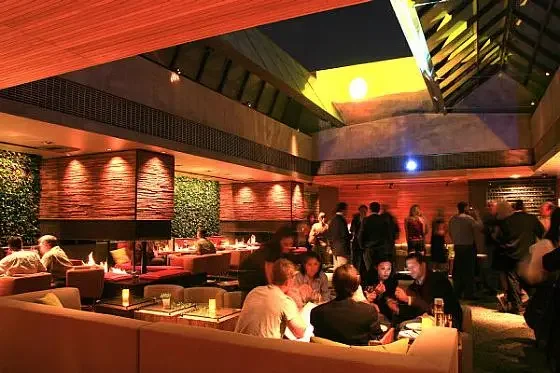
Events are organized by age range and neighborhood — often at bars or lounges chosen deliberately for conversation over noise.
Attendees meet roughly eight to twelve people, in short one-on-one rounds across an evening.
Picks are submitted digitally, usually through a simple web link rather than paper or an app.
Matches go out after the event, once everyone's selections are in.
The entire process takes one evening — and by most accounts, delivers more usable information than weeks of app messaging does.
FAQ
How common is dating app burnout, really? Very. Forbes Health's 2024 survey found 78% of users report feeling exhausted by dating apps at least sometimes, with the figure higher among Gen Z and women specifically.
What are people actually replacing dating apps with? The most commonly cited alternatives are in-person speed dating, neighborhood-based mixers, and curated matchmaking or introductions.
Do dating apps actually lead to relationships? Sometimes — Pew Research puts the share of U.S. online daters who end up in a committed relationship or marriage with someone they met on an app at around 12%.
Is in-person speed dating only for younger singles? No. Most events are organized by age bracket, so participants are grouped with others in a similar dating stage rather than mixed at random.
Do in-person dating events require downloading an app? Increasingly, no. Many now run on a simple web-based sign-in rather than a dedicated app.